
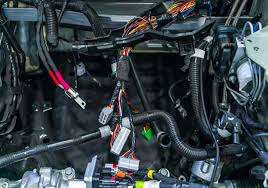
Introduction to Vehicle Electrical Systems
- Electricity results from the movement of electrons between atoms, with atoms composed of protons, neutrons, and electrons, where electrons orbit protons in the nucleus.
- Positive and negative charges within atoms cause attraction and repulsion, akin to magnetic poles, affecting electron orbit and movement.
- Free electrons in outer shells (valence ring) determine an atom’s capacity to conduct electricity, with materials classified as conductors, insulators, or semiconductors based on electron availability.
Electrical Current and Conductivity
- Electrons move through conductors when an imbalance of charge exists, driven by voltage (electrical pressure) which causes current flow; conventional current assumes flow from positive to negative, though electrons flow oppositely.
- Units of electricity include amperes (current), volts (electrical pressure), and ohms (resistance), with precise measurement tools such as ammeters, voltmeters, and ohmmeters used for diagnosis.
- The movement of free electrons creates electric current, which varies in size from small to large, depending on the number of electrons moving within the conductor.
Sources of Electricity
- Static electricity is generated through friction between surfaces, causing stationary charges; heat, light, pressure, and chemical reactions are also sources of electrical energy in vehicles.
- Magnetism and the motion of conductors through magnetic fields induce electricity, fundamental in devices like starters and alternators.
- Thermoelectricity, photoelectricity, piezoelectricity, and electrochemistry also contribute to automotive electrical systems, involving materials like silicon, germanium, and electrochemical reactions in batteries.
Conductors, Resistance, and Resistors
- Resistance in conductors depends on material, length, temperature, and cross-sectional area; shorter and thicker conductors offer less resistance.
- Resistors limit electrical current flow; fixed resistors are used for precise control, while variable resistors (potentiometers, rheostats) adjust voltage or current for components like sensors and dimmers.
Simple Electric Circuits
- Complete circuits require a power source, conductors, loads (resistance), switches, and grounding; circuits can be series, parallel, or series-parallel, affecting component operation and failure modes.
- Proper circuit design ensures continuous current flow, with safety devices like fuses and circuit breakers preventing overloads.
Electrical Components and Safety
- Components include switches, fuses, fusible links, relays, and relays, which control, protect, and switch electrical flow; safety practices include disconnecting negative terminals and avoiding sparks during servicing.
- Vehicle systems utilize dual power sources (battery and alternator), and components such as starters, ignition systems, lighting, and other accessories form the core electrical network.
Battery: Construction, Types, and Maintenance
- The lead-acid battery stores chemicals undergoing electrochemical reactions to produce electrical energy; constructs include case, plates, separators, cells, terminals, and electrolyte (sulfuric acid and water).
- Battery types vary from primary cells to maintenance-free sealed lead-acid batteries, with capacities measured in cold cranking amps (CCA), reserve capacity, amp-hours, and watts, affecting engine starting and electrical load handling.
- Routine maintenance includes checking electrolyte levels, cleaning corrosion, testing specific gravity with hydrometers, and inspecting connections; safety precautions prevent acid spills, sparks, and damage to electronics during servicing.
Battery Testing and Troubleshooting
- Visual inspections, specific gravity measurements, open-circuit voltage tests, load testing, and terminal resistance checks help diagnose battery health; safety measures include wearing gloves and avoiding sparks.
- Common problems include low charge, faulty connections, sulfation, or failing cells; proper testing ensures accurate diagnosis before replacement.
Starting System Components and Operation
- The starting system comprises the battery, ignition switch, cables, solenoid, and starter motor; it engages the engine’s flywheel to initiate engine rotation.
- Control systems include the ignition switch, neutral/clutch safety switches, and electronic control modules, with computer-controlled starting involving sensors like crankshaft and camshaft sensors for precise timing.
- Starter motors convert electrical energy into mechanical torque; they consist of a housing, field coils, armature, commutator, brushes, and overrunning clutch, with operation based on electromagnetic principles and counter-electromotive force (CEMF) effects.
Starter Motor Testing and Disassembly
- Tests include pull-in and hold-in, no-load performance, resistance checks, and voltage drop examinations; tools such as multimeters, scope, and mechanical gauges are used.
- Disassembly involves removing brushes, bearings, the armature, and drive components; inspection focuses on slip rings, brushes, armature windings, and clutch operation, with replacements for worn parts.
- Proper reassembly and installation ensure reliable operation, with careful adjustment of gear clearance and alignment to prevent damage.
Charging System and Alternator Operation
- The primary goal of the charging system is to replenish the battery via electromagnetic induction, converting engine mechanical energy into electrical energy through the alternator.
- Alternators generate AC voltage via a rotating magnetic field (rotor) and stationary conductors (stator), with rectification through diodes converting AC to DC for vehicle use.
- Modern systems include electronic voltage regulators and PCM control for precise output regulation, with sensors monitoring system parameters for optimal performance.
Alternator Testing and Maintenance
- Output tests measure voltage and current under no load and load conditions, with voltage drop tests indicating high resistance in wiring or connections; proper belt tension and cleanliness are crucial.
- Faulty diodes, worn brushes, defective bearings, and damaged windings are diagnosed using multimeters, scopes, and visual inspections, with replacements or repairs based on specifications.
- Proper installation, including wiring and belt adjustment, ensures efficient charging; diagnostic procedures follow manufacturer guidelines for troubleshooting.
Ignition System Fundamentals
- The ignition system generates and distributes high-voltage sparks to ignite the air-fuel mixture, utilizing contact points, electronic modules, or coil-on-plug systems for timing control.
- Coils operate based on electromagnetic induction, with primary windings controlling magnetic fields and secondary windings producing high voltage; switching devices like transistors or modules control coil firing.
- Sensors such as crankshaft and camshaft position sensors (magnetic, Hall-effect, optical) provide signals for precise timing; resistance, voltage, and signal integrity are checked for troubleshooting.
Distributor and Spark Plug Operation
- The distributor directs high-voltage from the coil to individual spark plugs based on the firing order, with differences in systems such as waste spark, coil-over-plug, and distributorless ignition systems (DIS).
- Spark plugs need regular inspection and replacement; electrode wear, fouling, and correct gaps are critical factors affecting engine performance and efficiency.
- Proper ignition timing, usually checked with a timing light, is essential for optimal engine operation; adjustments are made based on calibration marks and specifications, considering engine wear.
Lighting and Signal Systems
- Vehicle lighting includes headlights, taillights, turn signals, hazard warnings, interior lamps, and auxiliary lights, all controlled by switches, relays, and sensors.
- Headlight systems comprise sealed-beam or composite halogen, HID, xenon, and LED types, with specific wiring, aiming, and safety adjustments for optimal visibility and compliance.
- Signaling devices include flashers, brake lights, warning lights, and automatic systems like automatic high-beam, adaptive headlights, and headlamp leveling, monitored via electronic modules and sensors.
Vehicle Instrumentation and Warning Devices
- Instrument panel displays include analog and digital gauges (speedometer, tachometer, oil pressure, temperature, fuel, odometer), with sensors and IVRs ensuring accurate readings.
- Warning and indicator lights alert the driver to system status, including warning lights for brakes, engine, airbag, low fuel, coolant, and tire pressure; diagnosis involves circuit checks and sensor testing.
- Device testing, such as fuse checks, sensor resistance, and signal voltages, ensures proper function; troubleshooting follows systematic procedures based on manufacturer specifications.
- Teacher: Etienne DUSHIMIRIMANA IRAKIZA