
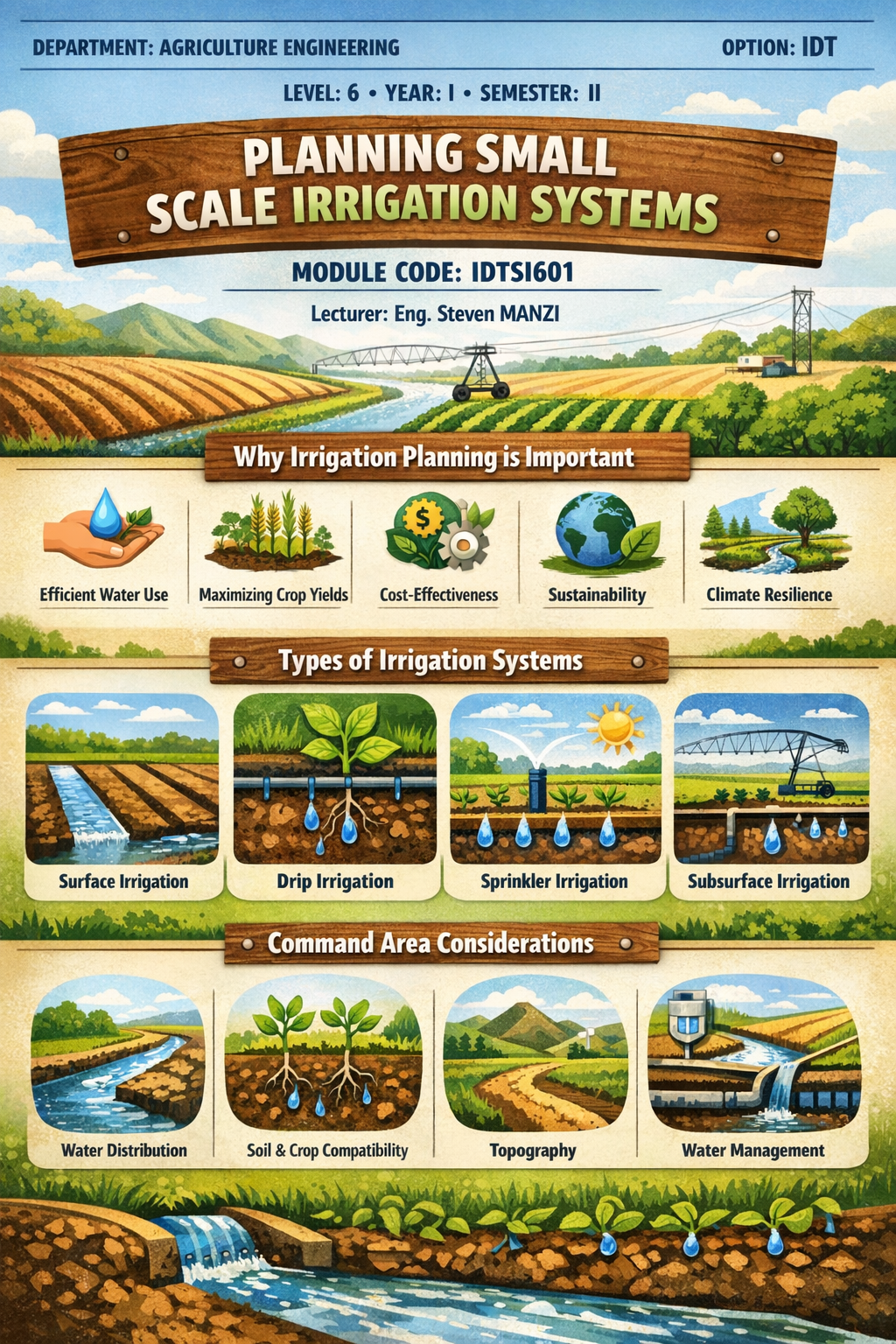
This module provides learners with comprehensive knowledge and practical skills required for planning small-scale irrigation systems. It begins with understanding the importance of irrigation planning, emphasizing efficient water use, improved crop yields, cost-effectiveness, climate resilience, and environmental protection. Students explore different irrigation methods, including surface, sprinkler, drip, and subsurface systems, along with their advantages, limitations, and suitability for various agro-ecological conditions.
The course covers identification of irrigation needs by examining topographic features, water sources, and water quality parameters. Learners acquire practical skills in using survey tools such as GPS, dumpy levels, theodolites, total stations, and flow measurement techniques. Water balance concepts, hydrological cycle components, and irrigation efficiencies are also addressed to ensure accurate planning and sustainable water management.
A key component of the module is stakeholder engagement, including the role of Water Users Associations in project development and management. Students analyze socioeconomic and environmental impacts of irrigation projects, focusing on health risks, environmental degradation, biodiversity, and pollution control.
Finally, the course guides learners through pre-feasibility studies, economic analyses, project governance, and reporting structures, preparing them to design, assess, and implement viable and sustainable irrigation schemes.
- Teacher: Steven MANZI