
AUTES601:Maintain Vehicle Electrical System
Module Information
- Program: TVET Advanced Diploma in Automobile Technology
- Level: RTQF Level 6
- Credits: 12
- Department: Mechanical Engineering
- Semester: II
The module equips students with the knowledge and practical skills required to identify, diagnose, maintain, repair, reassemble, reinstall, and test vehicle electrical systems and accessories safely and effectively.
Learning Outcomes
After completing this module, students should be able to:
- Identify vehicle electrical systems and their components.
- Explain the functions of electrical system components.
- Select appropriate tools, materials, and equipment.
- Diagnose faults in electrical systems.
- Remove and reinstall electrical components.
- Repair and test electrical systems.
- Diagnose and repair electrical accessories.
UNIT 1: IDENTIFY VEHICLE ELECTRICAL SYSTEMS
This unit introduces the major electrical systems used in modern vehicles.
1. Vehicle Power Supply
Vehicles use two sources of electrical power:
- Battery – supplies electrical energy when the engine is stopped or during starting.
- Alternator – supplies electrical energy while the engine is running and recharges the battery.
The battery stores chemical energy and converts it into electrical energy, while the alternator converts mechanical energy from the engine into electrical energy through electromagnetic induction.
2. Charging System
The charging system restores battery charge and powers all electrical accessories during engine operation.
Main Components
- Battery
- Alternator (AC Generator)
- Drive Belt
- Voltage Regulator
- Charge Indicator
- Ignition Switch
- Wiring Harness
- Starter Relay
- Fusible Link
Functions
- Recharge the battery
- Supply electrical loads
- Maintain system voltage
- Prevent overcharging
The voltage regulator automatically controls alternator output according to electrical demand.
3. Starting System
The starting system converts electrical energy from the battery into mechanical energy to crank the engine.
Components
- Battery
- Starter Motor
- Starter Solenoid
- Starter Relay
- Ignition Switch
- Starter Drive
- Flywheel Ring Gear
- Safety Switch
- Battery Cables
The starter motor may draw between 250–400 amperes during engine cranking, requiring heavy-gauge cables and magnetic switching devices.
4. Ignition System
The ignition system produces and distributes high voltage to ignite the air-fuel mixture.
Types
- Conventional Ignition
- Electronic Ignition
- Distributor Ignition
- Distributorless Ignition (DIS)
- Coil-on-Plug (COP)
Modern ignition systems are controlled electronically by the Engine Control Module (ECM) using various sensors to optimize spark timing.
5. Lighting and Signaling System
Provides visibility and communicates driver intentions.
Includes
- Headlights
- Brake Lights
- Tail Lights
- Turn Signals
- Reverse Lights
- Interior Lights
- Instrument Panel Lights
- Hazard Lights
Modern lighting systems often incorporate Body Control Modules (BCMs), LEDs, HID lamps, and automatic lighting controls.
6. Circuit Protection
Electrical circuits are protected against excessive current.
Fuses
- Glass
- Blade
- Cartridge
A fuse melts when current exceeds its rating and must be replaced with one of the same rating.
Circuit Breakers
Circuit breakers automatically interrupt current during overload conditions and reset either automatically or manually. They are commonly used in power window circuits.
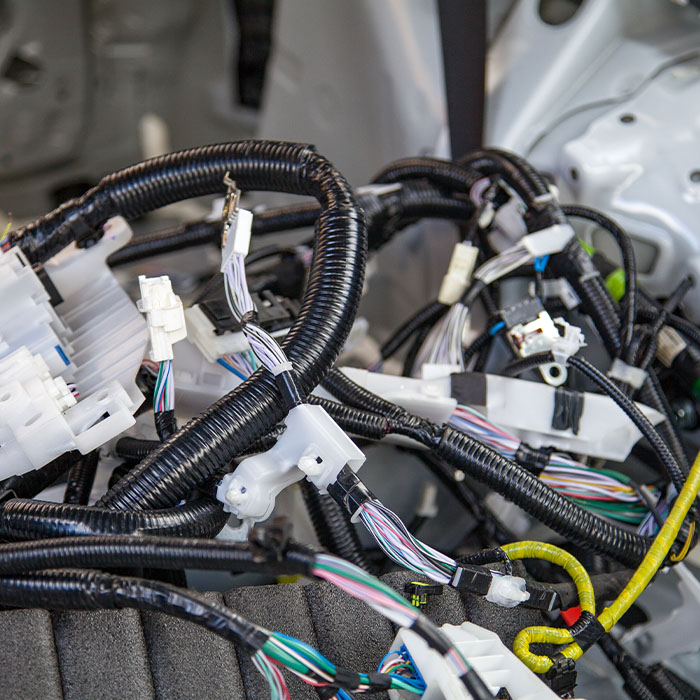
7. Wiring Harnesses
A wiring harness organizes and protects electrical wires.
Advantages
- Simplifies installation
- Protects wires
- Reduces electrical faults
- Improves reliability
Harnesses may be simple (serving a few circuits) or complex (engine compartment and dashboard).
8. Vehicle Gauges
Instrument gauges monitor vehicle operating conditions.
Examples include:
- Speedometer
- Tachometer
- Fuel Gauge
- Temperature Gauge
- Oil Pressure Gauge
- Warning Indicators
Modern gauges are computer-controlled and receive information from sensors through the BCM or dedicated processors.
UNIT 2: VEHICLE ELECTRICAL COMPONENTS
Battery
The battery stores electrical energy and supplies high current during engine starting.
Main Parts
- Case
- Cover
- Positive Plates
- Negative Plates
- Separators
- Cells
- Electrolyte
- Vent Caps
- Terminal Posts
A fully charged 12 V battery consists of six cells connected in series, each producing approximately 2.1 V.
Starter Motor
Major components include:
- Housing
- Armature
- Field Windings
- Brushes
- Commutator
- Bearings
- Starter Drive
Supporting components:
- Solenoid
- Relay
- Overrunning Clutch
- Gear Reduction Mechanism
- Safety Switch
The starter circuit carries high current, while the control circuit uses low current to activate the magnetic switch.
Alternator
The alternator converts mechanical energy into electrical energy.
Main Components
- Rotor
- Slip Rings
- Brushes
- Stator
- Rectifier Bridge
- Voltage Regulator
- Housing
- Cooling Fan
Important concepts:
- Electromagnetic induction
- Three-phase AC generation
- Wye and Delta windings
- Full-wave rectification using diodes
The rectifier bridge converts AC produced by the alternator into DC suitable for the battery and vehicle electrical system.
Ignition Components
Major components include:
- Ignition Coil
- Distributor
- Ignition Module
- Crankshaft Position Sensor
- Hall-Effect Sensor
- Magnetic Pickup Coil
- Optical Sensor
- Spark Plug Cables
- Spark Plugs
Modern vehicles commonly use Distributorless Ignition Systems (DIS) or Coil-on-Plug (COP) systems for improved efficiency and reliability.
Lighting Components
Lighting systems include:
- Halogen Lamps
- HID Lamps
- LED Lamps
- Single- and Double-Filament Bulbs
- Switches
- Relays
- Flashers
Proper lamp replacement requires matching the manufacturer's specified trade number.
UNIT 3: SERVICE AND DIAGNOSIS
Students learn to:
- Select appropriate tools and equipment.
- Inspect electrical systems.
- Test batteries.
- Diagnose starting system faults.
- Diagnose charging system faults.
- Diagnose ignition system faults.
- Remove and reinstall starter motors and alternators.
- Repair lighting systems.
- Repair gauges.
- Test repaired systems.
ELECTRICAL ACCESSORIES
The module also covers diagnosis and servicing of:
- Heated Rear Window Defoggers
- Heated Mirrors
- Power Windows
- Power Seats
- Windshield Wipers
Students learn identification, diagnosis, removal, repair, reinstallation, and testing procedures for these accessories.
Practical Skills Gained
Upon successful completion, students will be able to:
- Identify electrical system components.
- Read electrical wiring diagrams.
- Test batteries, starters, and alternators.
- Diagnose electrical faults using test equipment.
- Repair and replace electrical components.
- Service lighting and signaling systems.
- Maintain electrical accessories safely.
- Apply safe workshop practices.
Key Principles to Remember
- The battery stores electrical energy, while the alternator generates electrical energy.
- The starting system converts electrical energy into mechanical energy.
- The charging system replenishes the battery and powers vehicle loads.
- The ignition system produces high voltage to ignite the air–fuel mixture.
- Fuses and circuit breakers protect electrical circuits from excessive current.
- The wiring harness distributes power and signals throughout the vehicle.
- Modern vehicles rely on electronic sensors and computer-controlled modules for efficient electrical system operation.
Overall Conclusion
AUTES601 provides a comprehensive foundation in automotive electrical systems by combining electrical theory with practical maintenance and diagnostic procedures. Students develop the competence to inspect, diagnose, service, repair, and test vehicle electrical systems—including batteries, starting systems, charging systems, ignition systems, lighting circuits, wiring harnesses, gauges, and electrical accessories. These skills are essential for maintaining modern vehicles safely, efficiently, and in accordance with professional automotive service standards.
- Enseignant: Etienne DUSHIMIRIMANA IRAKIZA