Irrigation Equipment Sales and Services (IDTES701) is an industry-oriented competency-based module offered to learners pursuing the RQF Level 7 Advanced Diploma in Irrigation and Drainage Technology, Year 3, Semester 1. The module is designed to develop the knowledge, practical skills, communication abilities, and professional attitudes required to provide effective irrigation equipment sales and services. It integrates technical irrigation engineering knowledge with customer care, product advisory, equipment selection, innovation research, and commercial transaction skills.
The module begins with identifying customer needs, where learners develop appropriate interpersonal skills for understanding customer requirements. They learn how to listen actively, communicate clearly, ask relevant questions, demonstrate empathy and professionalism, and assess customer needs. Customer assessment considers important factors including crop, farm size, water source and availability, distance from the water source, elevation, energy source, preferred irrigation method, budget, installation requirements, training, and maintenance needs. Learners also develop competence in handling customer enquiries concerning product availability, specifications, prices, installation, operation, maintenance, warranties, delivery, spare parts, and product compatibility.
The second learning unit focuses on providing advice on irrigation products and services. Learners are trained to provide accurate, relevant, practical, economical, understandable, and customer-oriented advice. They learn to exhibit and explain irrigation products, demonstrate their operation, identify alternative and additional products, and respond professionally to customer concerns. Product demonstrations cover product purpose, components, specifications, installation, operation, maintenance, safety, advantages, limitations, price, and warranty conditions.
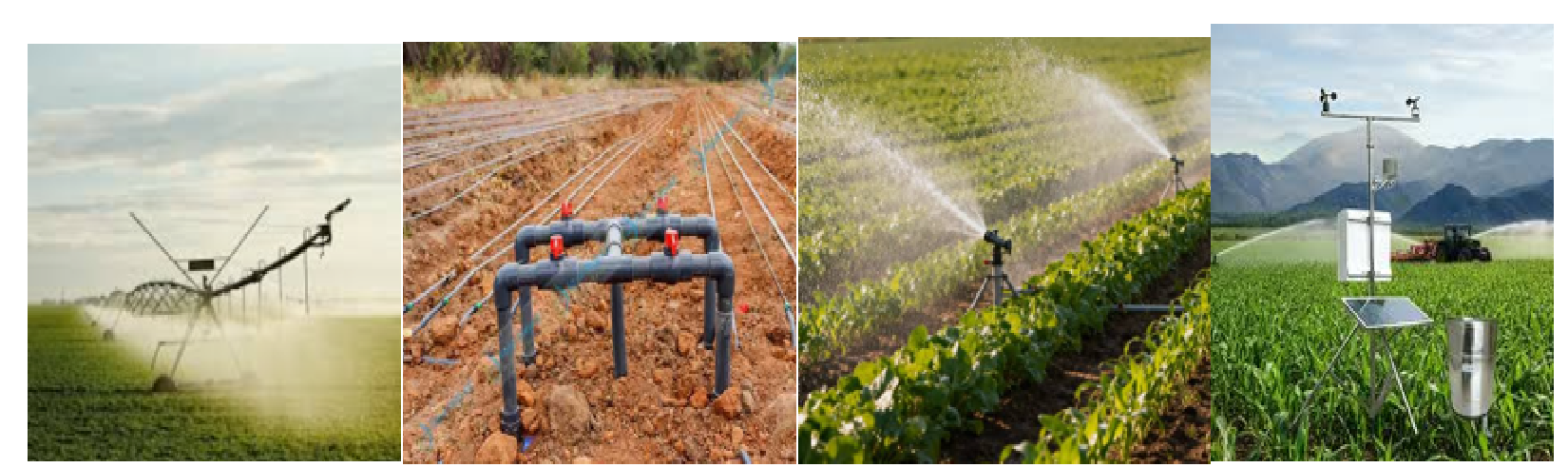
The third learning unit develops competence in recommending irrigation components and pumps. Learners learn to interpret irrigation designs and identify requirements for pumps, pipes, filters, valves, pressure regulators, pressure gauges, flow meters, fertilizer injectors, sprinklers, drippers, storage tanks, controllers, and sensors. Pump selection is based on flow rate, total dynamic head, water source, elevation, pressure, energy source, water quality, efficiency, maintenance requirements, and cost. Particular emphasis is placed on selecting pumps according to the required duty point rather than horsepower alone.
The fourth learning unit addresses researching irrigation innovations and products. Learners develop the ability to maintain professional contacts, review new irrigation technologies, organize exhibitions and field demonstrations, and interpret technical information from manufacturers, suppliers, researchers, universities, extension services, technical publications, and field trials. Emerging technologies include solar-powered irrigation, automated irrigation, soil-moisture sensors, IoT systems, remote monitoring, smart controllers, variable-rate irrigation, automated fertigation, and mobile-based irrigation control.
Finally, the module develops learners' competence in conducting retail transactions with irrigation clients. Learners acquire skills in estimating quantities, preparing Bills of Quantities and quotations, negotiating prices and payment options, explaining warranties, arranging installation and after-sales services, organizing repairs and maintenance, and coordinating delivery of irrigation merchandise.
Overall, the module prepares learners to work professionally with irrigation clients and provide technically appropriate products and services for marshland, hillside, small-scale, large-scale, garden, and greenhouse irrigation systems, with minimum guidance. Assessment includes formative assessments, assignments, practical activities, and summative assessment at the end of the module.
- Enseignant: Aimable NIYIBIZI