
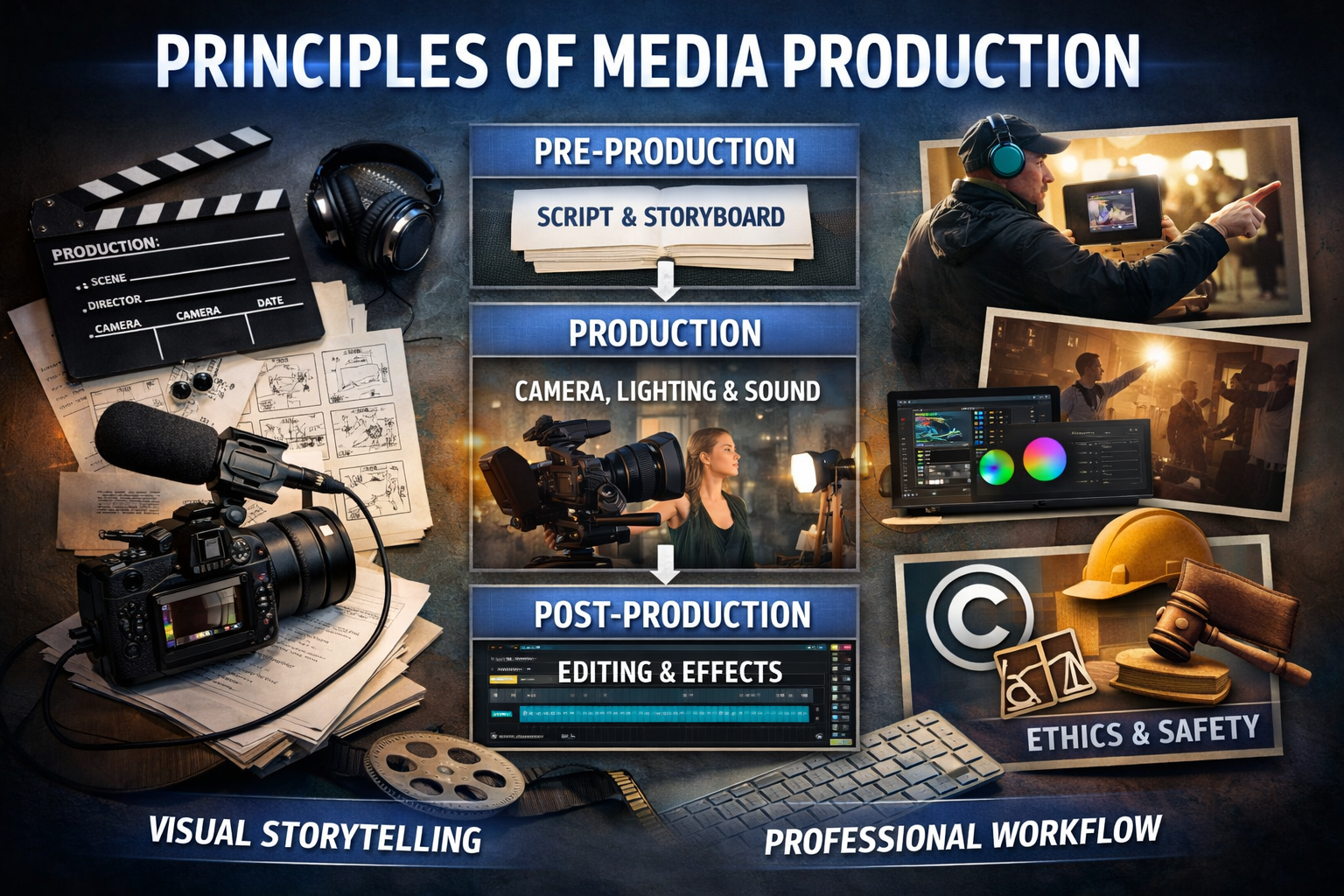
MODULE DESCRIPTION: PRINCIPLES OF MEDIA PRODUCTION
The Principles of Media Production module introduces learners to the fundamental concepts, processes, and practices involved in the creation of professional media content across film, television, and digital platforms. It provides a comprehensive foundation in both the technical and creative dimensions of media production, preparing students for practical engagement in the audiovisual industry.
The module explores the three core phases of media production—pre-production, production, and post-production—emphasizing their interdependence in achieving coherent and high-quality outputs. Learners are guided through the development of ideas into structured concepts, including story development, scripting, and storyboarding, followed by hands-on exposure to camera operation, sound recording, lighting techniques, and directing principles.
A strong focus is placed on visual storytelling and communication, enabling students to understand how meaning is constructed through composition, framing, editing, and sound design. The module also introduces industry-standard workflows and tools, encouraging learners to adopt professional production practices, including planning, teamwork, time management, and problem-solving on set.
- Enseignant: MUTAMBO Jean

Advanced Computer Skills
Advanced computer skills refer to a high level of proficiency in using computer systems, software applications, and digital technologies to perform complex tasks efficiently and securely. These skills go beyond basic computer literacy and demonstrate the ability to analyze, design, troubleshoot, and optimize digital solutions.
An individual with advanced computer skills can work with:
-
Operating Systems & System Administration – Managing Windows and Linux systems, configuring users and permissions, installing software, troubleshooting system errors, and performing system updates.
-
Networking & Cybersecurity – Configuring routers and switches, understanding IP addressing and subnetting, implementing firewalls, VPNs, intrusion detection systems, and applying security best practices.
-
Programming & Scripting – Writing and debugging code in languages such as Python, Java, C++, or JavaScript; automating tasks using scripts; developing applications or web solutions.
-
Database Management – Designing, managing, and querying databases using SQL; performing backups, recovery, and performance optimization.
-
Cloud Computing & Virtualization – Deploying and managing cloud services (AWS, Azure, Google Cloud), working with virtual machines, containers, and cloud security configurations.
-
Data Analysis & Visualization – Using tools like Excel (advanced formulas), Power BI, Tableau, or Python libraries to analyze, interpret, and visualize data.
-
Digital Tools & Collaboration Platforms – Managing enterprise tools such as Microsoft 365, Google Workspace, project management software, and automation platforms.
Advanced computer skills also include strong problem-solving ability, logical thinking, troubleshooting expertise, and the capacity to learn new technologies quickly.
- Enseignant: GAFEZA Gaspard

Advanced computer skills refer to a high level of proficiency in using digital technologies, software applications, and technical tools to solve complex problems efficiently. These skills include expertise in operating systems administration (Windows and Linux), network configuration, cybersecurity practices, database management, and cloud computing platforms. An individual with advanced computer skills can perform system troubleshooting, automate tasks using scripting languages such as Python or PowerShell, manage virtual machines, configure routers and switches, and analyze data using tools like Excel, SQL, or specialized analytics software.
Additionally, advanced computer skills involve understanding programming concepts, software development processes, and information security principles such as encryption, firewalls, and intrusion detection systems. Professionals with these skills can design and implement secure network infrastructures, develop web or mobile applications, manage servers, and ensure data integrity and confidentiality. They are also capable of adapting to new technologies quickly, integrating different systems, and providing technical support or training to others, making them highly valuable in today’s technology-driven environments.
- Enseignant: GAFEZA Gaspard
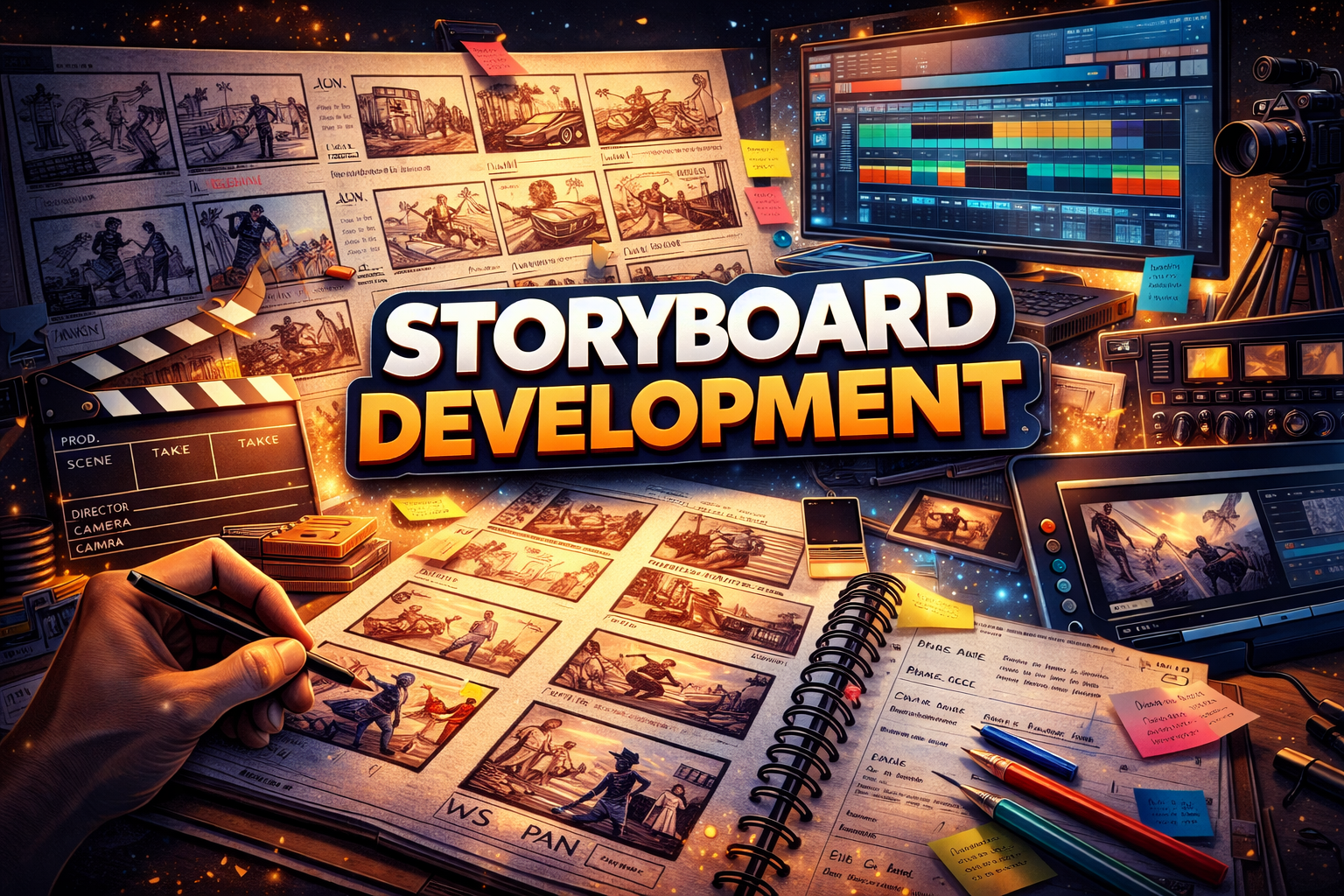
This module introduces learners to the principles and practices of storyboard development as a key planning tool in film, television, animation, advertising, and digital media production. It focuses on how visual ideas are translated into structured sequences that guide production from concept to execution.
Learners will explore the purpose and function of storyboards in pre-production, including shot composition, camera angles, movement, continuity, timing, and visual storytelling. The module covers different storyboard formats—hand-drawn, digital, and hybrid as well as industry-standard symbols, annotations, and conventions used by directors, cinematographers, editors, and production teams.
Through practical exercises and project-based learning, students will develop storyboards from scripts and concepts, ensuring narrative clarity, visual coherence, and technical feasibility. Emphasis is placed on communication skills, as storyboards serve as a visual language that aligns creative and technical teams.
By the end of the module, learners will be able to create clear, professional storyboards that effectively communicate storytelling intent, support production planning, and contribute to efficient and creative media production workflows.
- Enseignant: MUTAMBO Jean
Module Description: Principles of Media Production
This module introduces learners to the foundational principles and practices of media production across film, television, radio, and digital platforms. It provides an overview of how media content is planned, produced, and delivered, emphasizing both creative and technical processes involved in professional media work.
Learners will explore the core stages of media production; pre-production, production, and post-production while understanding the roles, responsibilities, and workflows of a media production team. The module covers essential concepts such as storytelling basics, script development, visual composition, sound, lighting, camera operation, editing, and media ethics.
Through practical exercises and project-based learning, students will apply production principles to create simple media content while developing skills in planning, teamwork, problem-solving, and communication. Attention is also given to health and safety, copyright, and professional standards in media production environments.
By the end of the module, learners will be able to explain and apply key principles of media production, participate effectively in a production team, and contribute to the creation of media products that meet basic industry and educational standards.
- Enseignant: MUTAMBO Jean

Module Description: Digital Storytelling and Film Analysis
This module introduces learners to the principles of digital storytelling and the critical analysis of film as a narrative and artistic medium. It explores how stories are constructed, communicated, and interpreted through moving images, sound, editing, and digital technologies.
Learners will study the fundamentals of storytelling, including narrative structure, character development, theme, point of view, and visual language. The module also develops analytical skills by examining film elements such as cinematography, sound, mise-en-scène, editing, genre, and symbolism. Students will learn how filmmakers use these elements to convey meaning, emotion, and ideology.
Through a combination of theory, film screenings, discussions, and practical exercises, learners will create short digital stories while applying storytelling techniques and analytical concepts. Emphasis is placed on linking theory to practice understanding not only how stories are made, but why creative choices are made and how audiences interpret them.
By the end of the module, learners will be able to critically analyze films using appropriate terminology and frameworks, and design simple digital storytelling projects that demonstrate narrative coherence, creativity, and an understanding of film language.
- Enseignant: MUTAMBO Jean
This module introduces learners to the principles and practices of audio production for creative and professional media contexts. It focuses on the complete audio workflow—from planning and recording to editing, mixing, and final output used in radio, film, television, podcasts, documentaries, and digital content.
Learners will develop practical skills in sound recording using studio and field equipment, including microphones, audio interfaces, mixers, and digital audio workstations (DAWs). The module covers key audio elements such as dialogue, narration, ambience, sound effects (SFX), music, room tone, and wild tracks. Emphasis is placed on audio quality, signal flow, microphone techniques, and proper gain staging.
Through hands-on studio and lab-based activities, students will record, edit, and mix audio projects while applying industry-standard workflows, file management, and technical specifications. The module also introduces basic audio mixing concepts such as balancing, equalization, dynamics processing, and exporting audio for different platforms.
By the end of the module, learners will be able to plan and produce clean, well-structured audio content that meets professional standards, demonstrating both technical competence and creative awareness in audio production.
- Enseignant: MUTAMBO Jean
Module Description
The Sound Design / Sound Creation module introduces first-year FTV and GDA students to the creative and technical foundations of sound for visual media. The module develops learners’ ability to listen critically, record original sounds, design soundscapes, and synchronize audio with image for film, television, animation, and digital media projects.
Students learn how sound functions as a narrative and emotional tool, shaping meaning, atmosphere, rhythm, and realism. Through hands-on practice, learners explore dialogue recording, Foley, sound effects (SFX), ambient sound, and basic music integration, using industry-standard recording techniques and digital audio workstations (DAWs).
The module emphasizes sound creation rather than sound consumption: students generate their own audio assets through field recording, studio sessions, and Foley performance, then edit and mix these elements to support storytelling. Local Rwandan environments and contexts are actively used as sound sources, encouraging authenticity and contextual relevance.
By the end of the module, students can design, record, edit, and mix sound that effectively complements visual content, preparing them for advanced audio production, animation sound design, and professional media workflows.
Iyi mbumbanyigisho irasobanura ubumenyi n’ubushobozi bukenewe kugira ngo uwigishwa abashe gukoresha neza Ikinyarwanda mu bukangurambaga butandukanye. Nyuma y’iri somo, uwiga azaba ashobora: Gukoresha ubuvanganzo bw’abana atanga uburere bukwiye ku bana, gukoresha Ikinyarwanda cy’Umukangurambaga mu bugeni bw’iyamamaza no gukoresha Ikinyarwanda kiboneye akora ubukangurambaga ku ngingo zitandukanye.
- Enseignant: Aphrodis NIYIKORA
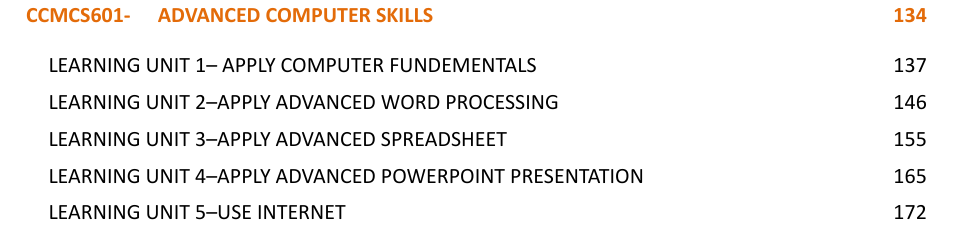
This course covers computer fundamentals, including system functions, file management, and protection methods. It develops advanced word processing skills such as formatting, inserting elements, using references, mail merge, and printing. Learners also gain advanced spreadsheet skills with formulas, functions, data management, charts, and print setup. PowerPoint skills focus on creating effective slides, applying designs, transitions, animations, managing slide masters, and printing. Finally, the course introduces internet use, covering network types, browsers, search engines, and web applications for communication and collaboration.
- Enseignant: GAFEZA Gaspard