
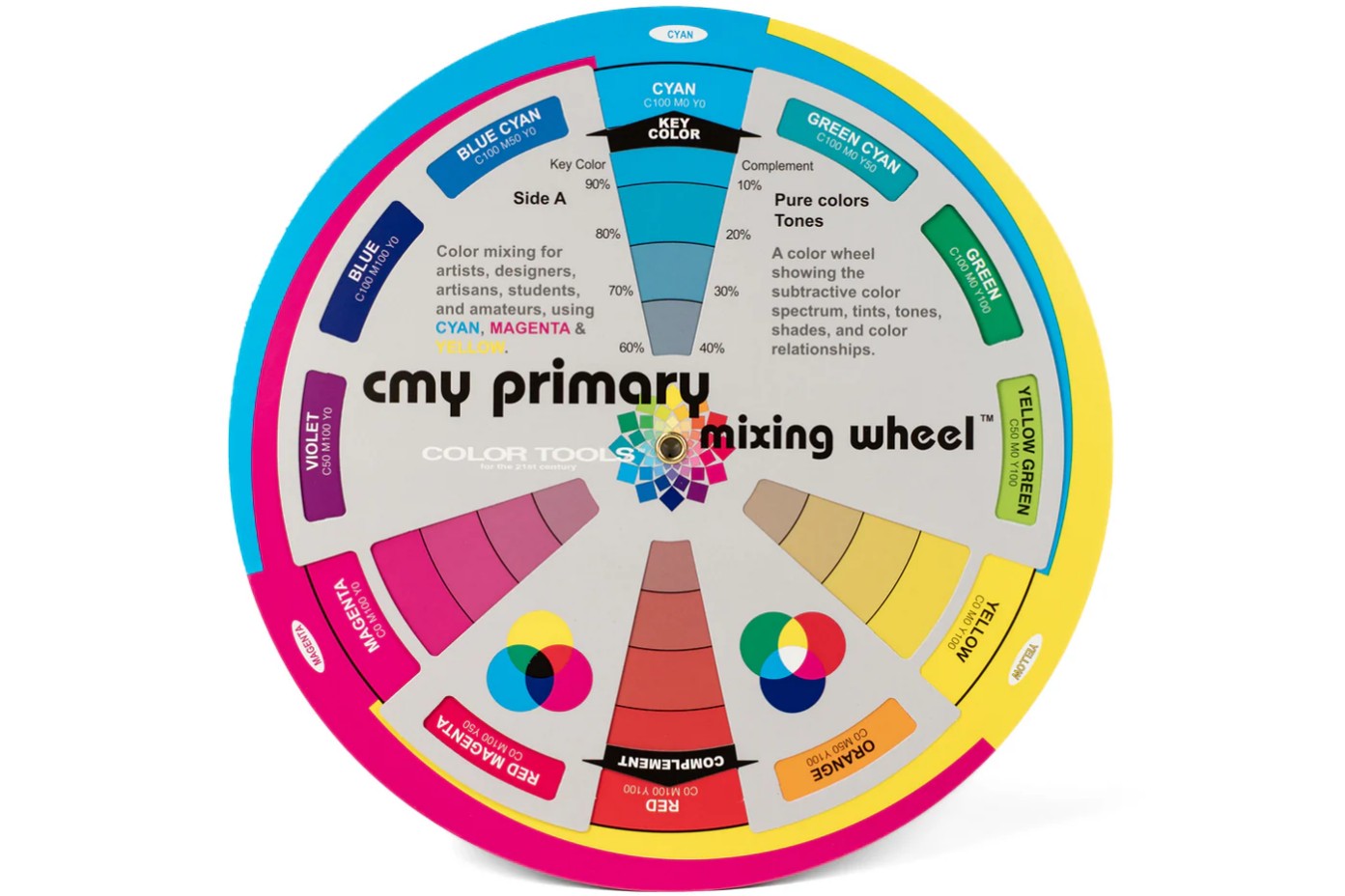
This module describes the skills, knowledge and attitudes required to apply geometrical Optics. At the end of this module, the trainee should be able to describe, interpret and apply the concepts of geometrical optics. This module will help the trainees to perform their tasks. It will be useful to trainees to analyze data, solve problems encountered in engineering as well as solving real life problems.
- Teacher: Olivier Niragire
MODULE DESCRIPTION: PRINCIPLES OF MEDIA PRODUCTION
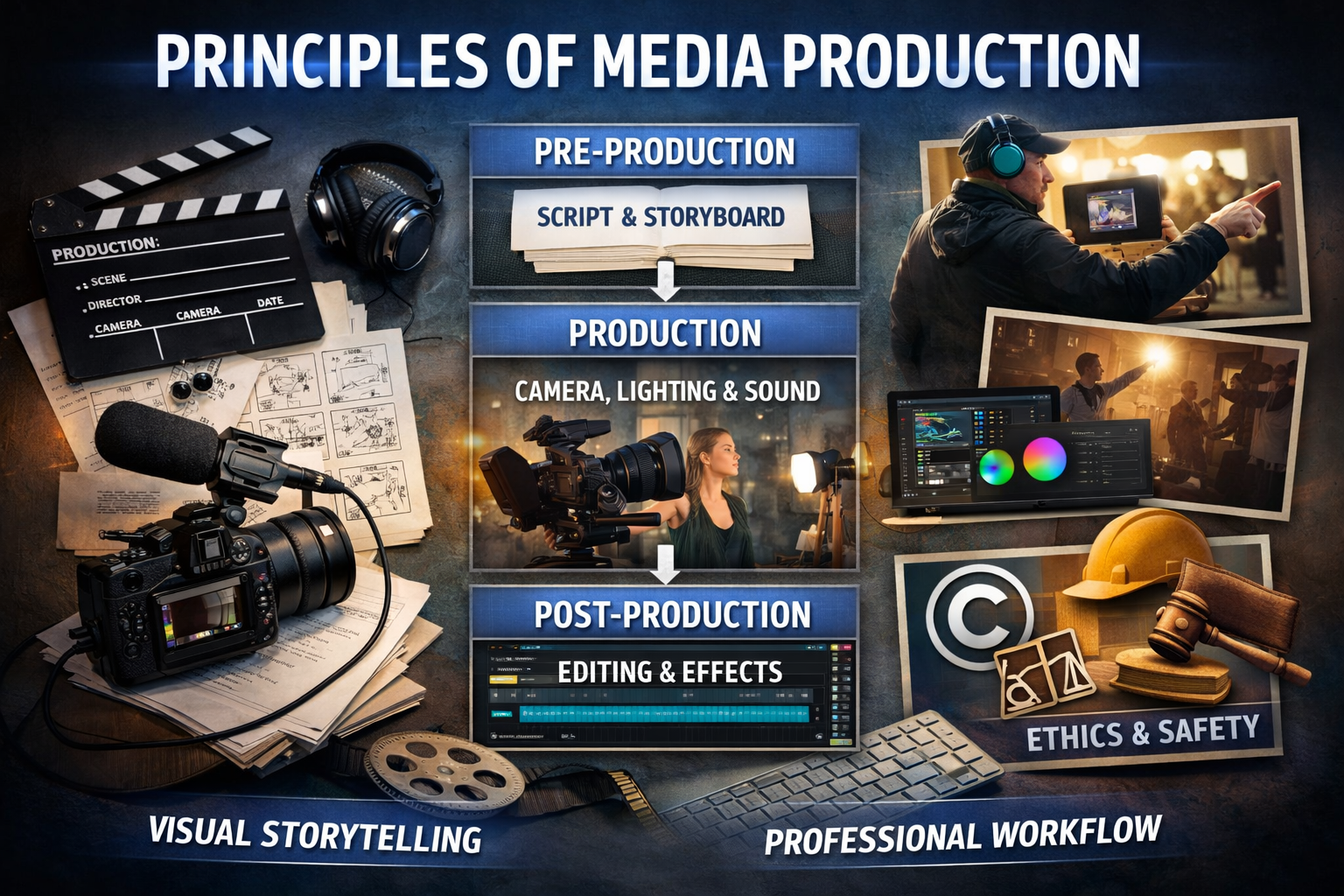
The Principles of Media Production module introduces learners to the fundamental concepts, processes, and practices involved in the creation of professional media content across film, television, and digital platforms. It provides a comprehensive foundation in both the technical and creative dimensions of media production, preparing students for practical engagement in the audiovisual industry.
The module explores the three core phases of media production—pre-production, production, and post-production, emphasizing their interdependence in achieving coherent and high-quality outputs. Learners are guided through the development of ideas into structured concepts, including story development, scripting, and storyboarding, followed by hands-on exposure to camera operation, sound recording, lighting techniques, and directing principles.
A strong focus is placed on visual storytelling and communication, enabling students to understand how meaning is constructed through composition, framing, editing, and sound design. The module also introduces industry-standard workflows and tools, encouraging learners to adopt professional production practices, including planning, teamwork, time management, and problem-solving on set.
- Teacher: MUTAMBO Jean

Computer skills refer to the ability to effectively use computers and related technologies to perform a wide range of tasks. These skills include basic operations such as using operating systems, managing files, and typing, as well as more advanced abilities like working with software applications (e.g., word processors, spreadsheets, and presentation tools), using the internet for research and communication, and maintaining cybersecurity practices. Strong computer skills also involve problem-solving, adapting to new technologies, and efficiently handling digital information in both academic and professional environments.
- Teacher: GAFEZA Gaspard

This module introduces trainees to the foundational concepts and practical skills required to produce professional graphic design work for print and digital applications. Trainees learn how to interpret and develop a creative brief, conduct design research, and generate strong design ideas using the elements and principles of design. The module also covers selecting and preparing design resources, including appropriate hardware, software, and digital images, while applying effective file and resource management for safe work practice. Through hands-on activities, trainees set up design documents, create vector graphics, manipulate raster images, and assemble assets using page layout workflows. By the end of the module, trainees will be able to finalize, proof, and export artwork in suitable formats (PDF, web/screen, and other required outputs) while meeting quality standards, time requirements, and client specifications.
- Teacher: Paul SEMIVUMBI

This module introduces learners to the principles and practices of storyboard development as a key planning tool in film, television, animation, advertising, and digital media production. It focuses on how visual ideas are translated into structured sequences that guide production from concept to execution.
Learners will explore the purpose and function of storyboards in pre-production, including shot composition, camera angles, movement, continuity, timing, and visual storytelling. The module covers different storyboard formats—hand-drawn, digital, and hybrid as well as industry-standard symbols, annotations, and conventions used by directors, cinematographers, editors, and production teams.
Through practical exercises and project-based learning, students will develop storyboards from scripts and concepts, ensuring narrative clarity, visual coherence, and technical feasibility. Emphasis is placed on communication skills, as storyboards serve as a visual language that aligns creative and technical teams.
By the end of the module, learners will be able to create clear, professional storyboards that effectively communicate storytelling intent, support production planning, and contribute to efficient and creative media production workflows.
- Teacher: MUTAMBO Jean
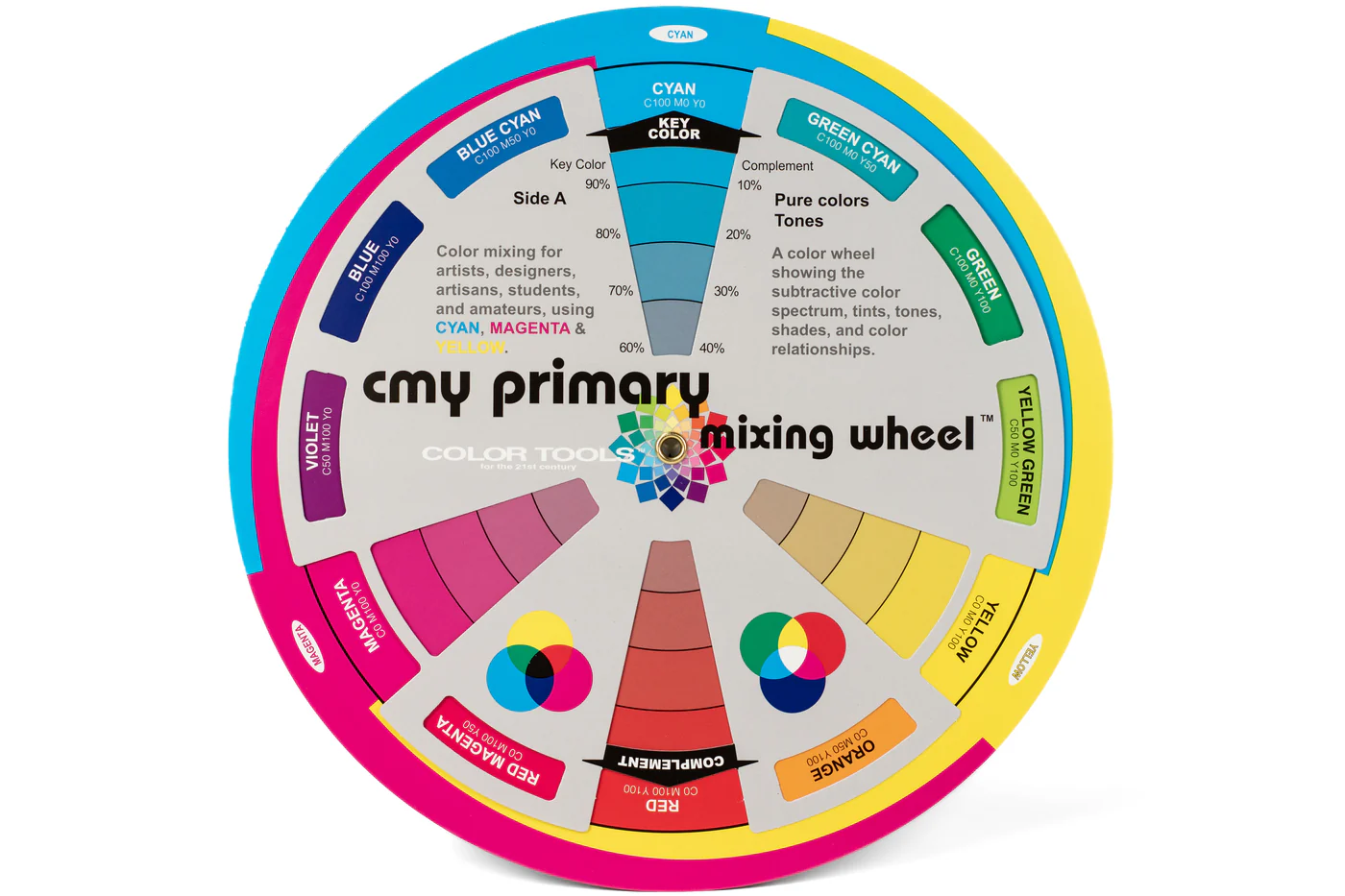
Geometrical optics
Module Description
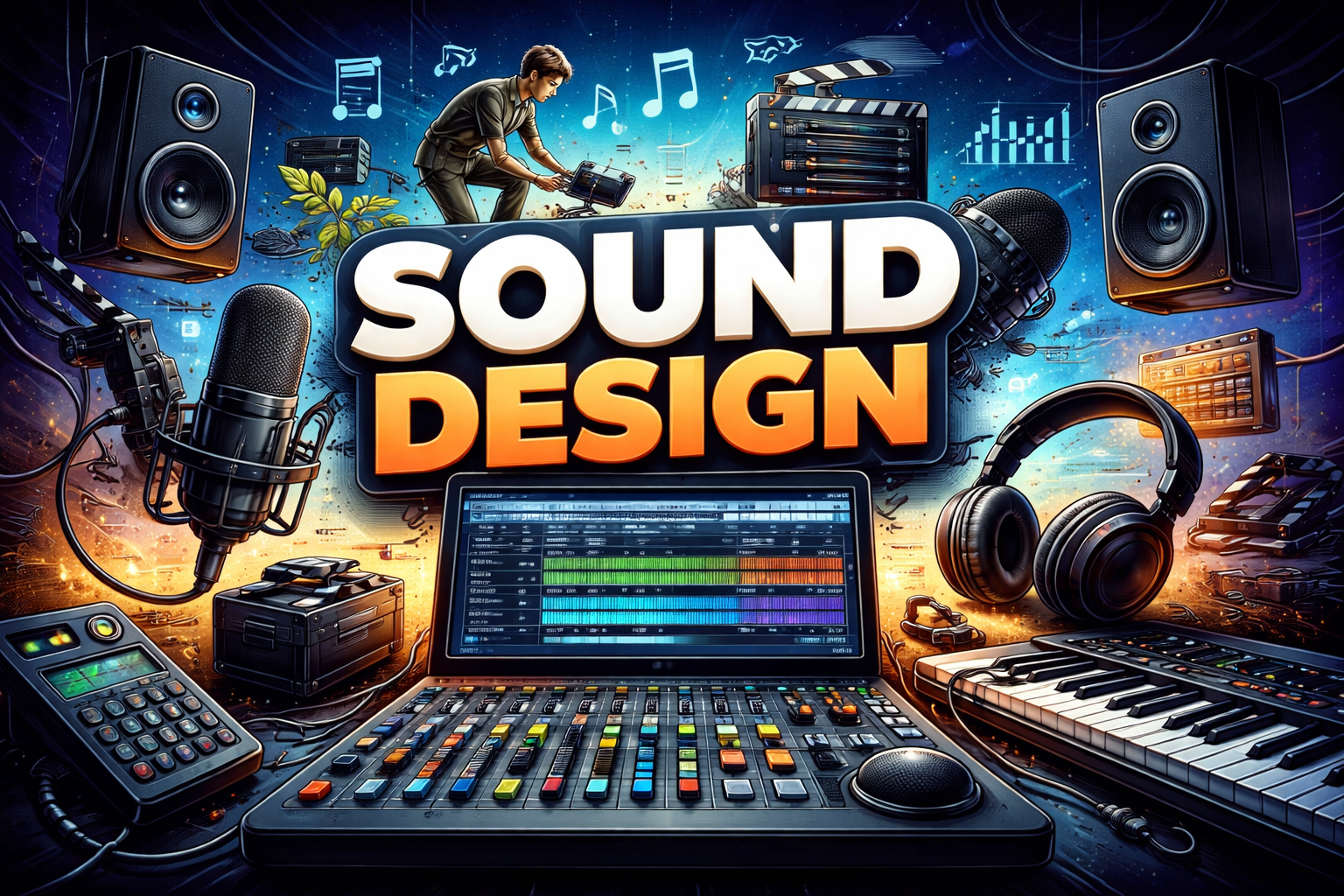
The Sound Design / Sound Creation module introduces first-year FTV and GDA students to the creative and technical foundations of sound for visual media. The module develops learners’ ability to listen critically, record original sounds, design soundscapes, and synchronize audio with image for film, television, animation, and digital media projects.
Students learn how sound functions as a narrative and emotional tool, shaping meaning, atmosphere, rhythm, and realism. Through hands-on practice, learners explore dialogue recording, Foley, sound effects (SFX), ambient sound, and basic music integration, using industry-standard recording techniques and digital audio workstations (DAWs).
The module emphasizes sound creation rather than sound consumption: students generate their own audio assets through field recording, studio sessions, and Foley performance, then edit and mix these elements to support storytelling. Local Rwandan environments and contexts are actively used as sound sources, encouraging authenticity and contextual relevance.
By the end of the module, students can design, record, edit, and mix sound that effectively complements visual content, preparing them for advanced audio production, animation sound design, and professional media workflows.
- Teacher: MUTAMBO Jean
Advanced Computer Skills is a course designed to enhance learners’ proficiency in using modern computer technologies for professional and academic tasks. It focuses on advanced use of operating systems, file management, productivity software, internet tools, and data security practices. Students learn to create and manage complex documents, spreadsheets, and presentations, use collaboration and cloud-based applications, and apply troubleshooting techniques for system maintenance. The course also introduces automation, database management, and emerging digital tools to improve efficiency and problem-solving. By completion, learners gain the competence to perform advanced computing tasks confidently in various work environments.
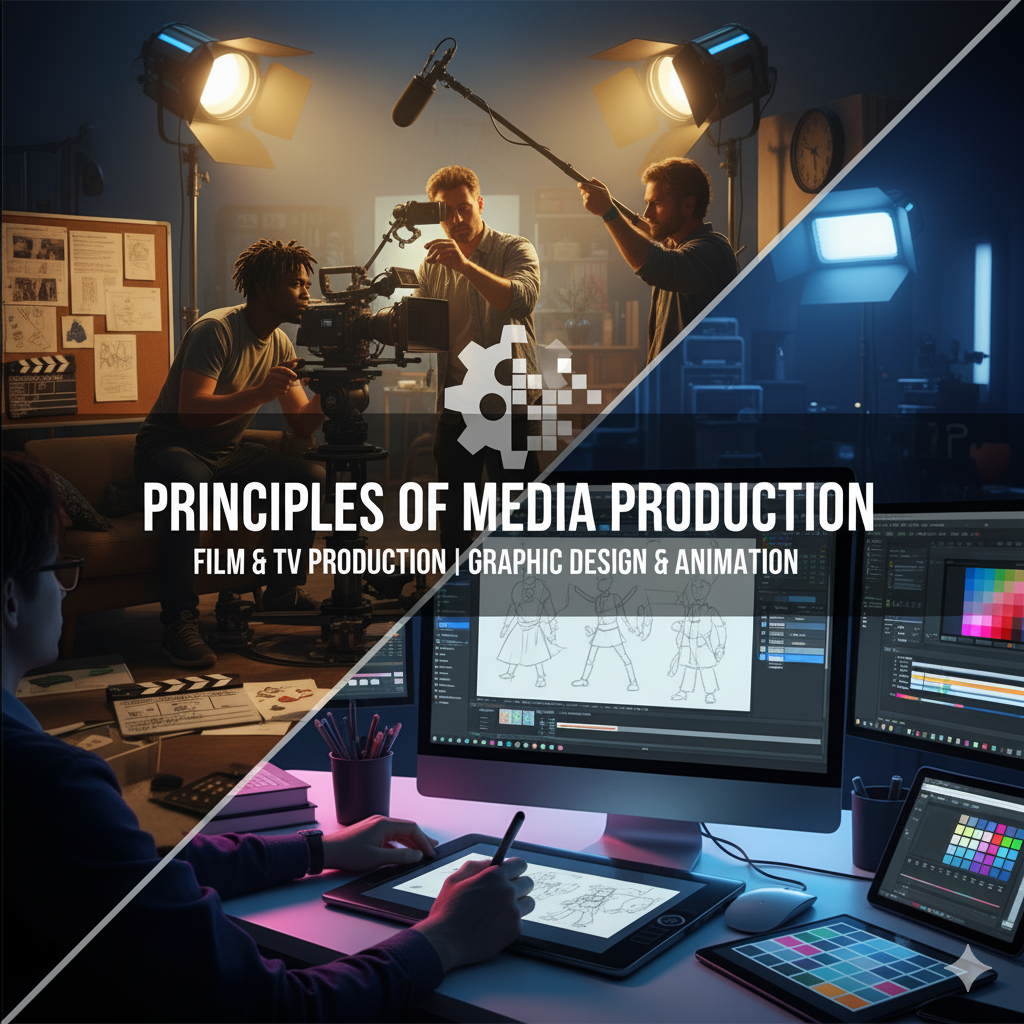
Module Description: Principles of Media Production 🎬🎨
This module provides a fundamental understanding of the core principles, techniques, and workflows common to various forms of media creation, serving as a foundational course for students in both Film and TV Production and Graphic Design and Animation. Students will learn the essential stages of the production pipeline, from initial concept to final delivery, and develop skills applicable across linear (time-based) and non-linear (static/interactive) media.
Module Objectives
Upon successful completion of this module, students will be able to:
- Identify and explain the three primary phases of media production: Pre-production, Production, and Post-production.
- Apply fundamental principles of visual communication, including composition, color theory, and visual hierarchy, to media projects.
- Demonstrate proficiency in basic technical operations related to image capture, sound recording, and digital asset management.
- Develop effective planning and organizational skills for managing media projects, including scripting, storyboarding, and scheduling.
- Critically analyze and evaluate various media forms (e.g., films, animations, graphic advertisements) based on their production quality and effectiveness in conveying a message.
- Teacher: MUTAMBO Jean