
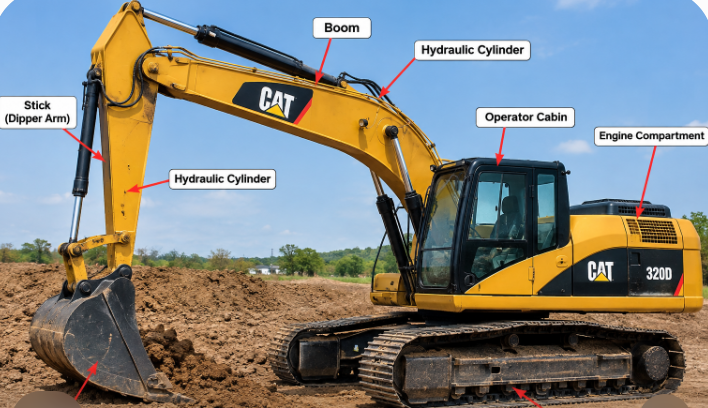
A hydraulic and pneumatic control system is a system used to control the movement, force, speed, and direction of machines using pressurized fluids or compressed air.
1. Hydraulic Control System
A hydraulic control system uses pressurized liquid, usually hydraulic oil, to transmit power and operate mechanical components.
Main components:
- Hydraulic pump,Hydraulic reservoir/tan,Filters,Pressure relief valve,Directional control valves,Flow control valves,Hydraulic cylinders,Hydraulic motors,Pipes, hoses, and fittings,Sensors and control devices
Applications: excavators, hydraulic presses, vehicle braking systems, lifting equipment, agricultural machinery, and industrial machines.
2. Pneumatic Control System
A pneumatic control system uses compressed air to transmit power and control machine movement.
Main components:
- Air compressor,Air receiver tank,Air filter,Pressure regulator,Lubricator,Directional control valves,Flow control valves,Pneumatic cylinders,Pneumatic motors,Air hoses and fittings,Sensors and switches
Applications: automated production lines, clamping machines, packaging machines, vehicle doors, robotic systems, and workshop equipment.
3. Control Process
Hydraulic:
Pump → Control Valve → Actuator → Mechanical Movement → Return to Tank
Pneumatic:
Compressor → FRL Unit → Control Valve → Actuator → Mechanical Movement → Exhaust
- Enseignant: Emmanuel TUYISHIME
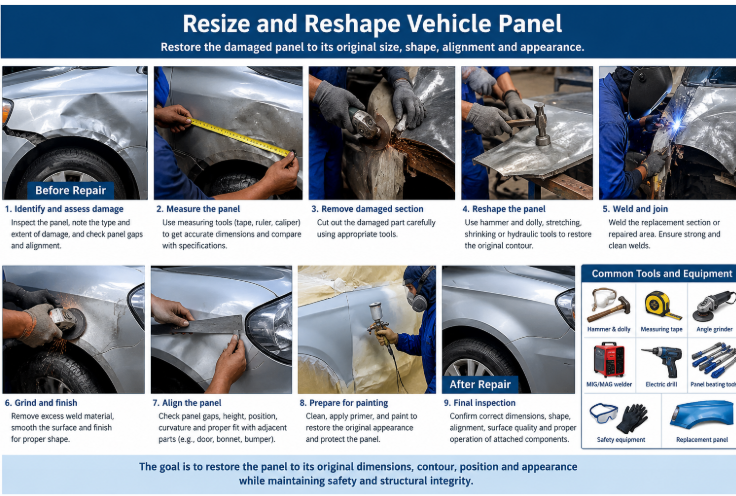
Resize and reshape vehicle panel is the process of restoring a damaged vehicle body panel to its original size, shape, alignment, and appearance. The work may involve measuring, cutting, stretching, shrinking, straightening, forming, welding, grinding, and finishing the panel.
2. Learning Objectives
At the end of the course, learners should be able to:
- Identify different types of vehicle body panels.
- Identify damaged areas and determine the extent of damage.
- Measure vehicle panels accurately.
- Determine whether a panel should be repaired, resized, reshaped, or replaced.
- Select appropriate panel repair tools and equipment.
- Remove damaged sections when necessary.
- Resize panels to the required dimensions.
- Reshape panels using suitable repair techniques.
- Align repaired panels correctly with adjacent components.
- Weld and finish repaired sections.
- Inspect the repaired panel for quality and safety.
- Enseignant: Emmanuel TUYISHIME