
This module describes the skills, knowledge and attitude required to apply programming
basics, install appropriate C compiler, declare variables, apply conditional and iteration
structure, define and use functions, and debugging a C program. This module is intended
to students pursuing advanced diploma in Mechatronics. At the end of this module, the
students will be able to create and debug usable C program that can run on different
platforms under minimum supervision.
- Enseignant: Vedaste NIYONSABA
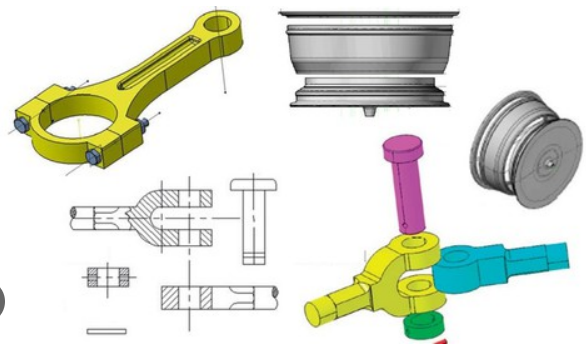
A Machine Drawing course for automobile technology equips students with the skills to draft, interpret, and modify technical blueprints for vehicle components. It covers conventional drawing standards, part and assembly illustrations, dimensioning tolerances,
outline the fundamental concepts of engineering graphics, standards, and the specific mechanical components relevant to vehicles. It establishes how students will learn to draft, read, and interpret technical drawings for manufacturing and assembly
Students gain the knowledge of conventional representation of materials, machine
elements, and sizes of drawing sheets
Students understand the concept of how to draw machine elements such as Screwed fasteners,
Keys, Cotters and Pin joints, Riveted joints, Shaft couplings and Bearings.
Students learn about the drawings of assembled views for
the part drawings of the following using conventions like
Engine parts.
- Enseignant: Jean de Dieu HIRWA
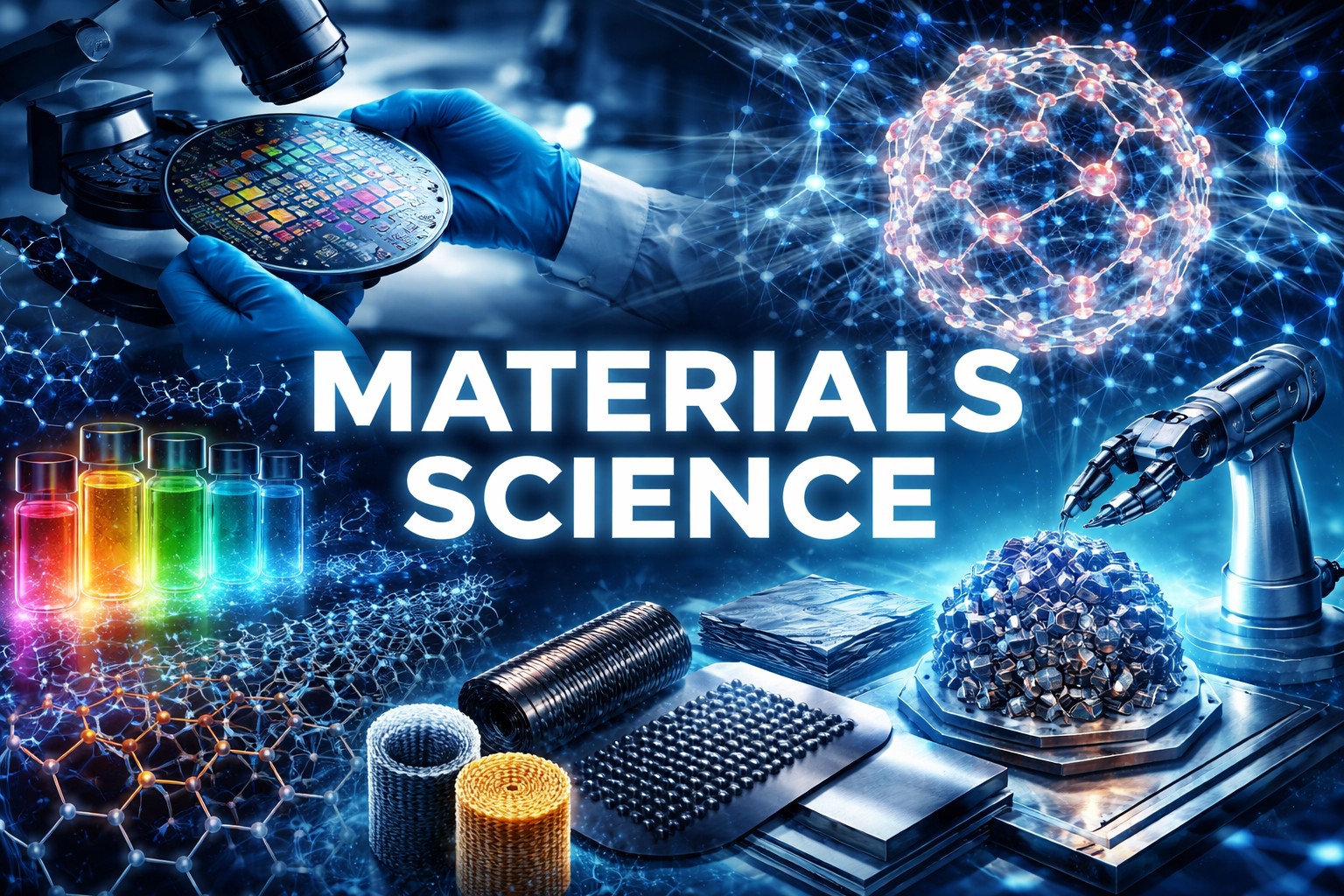
Materials Science – Summary Overview
Materials Science is an interdisciplinary field that studies the structure, properties, processing, and performance of materials to understand how they behave and how they can be improved for practical applications.
It focuses on the relationship between a material’s internal structure (from atomic to macroscopic scale) and its mechanical, thermal, electrical, magnetic, optical, and chemical properties. By controlling composition and processing methods, materials scientists design materials with desired performance characteristics.
The field covers major classes of materials, including metals and alloys, ceramics, polymers, composites, and advanced materials such as semiconductors, biomaterials, and nanomaterials. Materials Science plays a critical role in engineering, manufacturing, energy, transportation, construction, electronics, and healthcare.
Overall, Materials Science provides the scientific foundation for selecting, designing, and developing materials that meet modern technological and industrial needs.
- Enseignant: Jean Eric TWAHIRWA
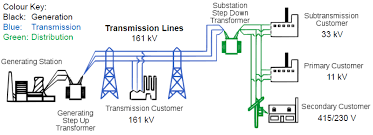
Electricity is the flow of electrons from one place to another. Electrons can flow through any material, but does so more easily in some than in others. How easily it flows is called resistance. The resistance of a material is measured in Ohms.
Since electrons are very small, as a practical matter they are usually measured in very large numbers. A Coulomb is 6.24 x 10¹⁸ electrons. However, electricians are mostly interested in electrons in motion. The flow of electrons is called current, and is measured in AMPS. One amp is equal to a flow of one coulomb per second through a wire.
Making electrons flow through a resistance requires an attractive force to pull them. This force, called Electro-Motive Force or EMF, is measured in volts. A Volt is the force required to push 1 Amp through 1 Ohm of resistance.
As electrons flow through a resistance, it performs a certain amount of work. It may be in the form of heat or a magnetic field or motion, but it does something. This work is called Power, and is measured in Watts. One Watt is equal to the work performed by 1 Amp pushed by 1 Volt through a resistance.

- Enseignant: Clement NSHUMBUSHA

This course builds on basic computer knowledge and focuses on developing advanced skills required in modern academic and professional environments. Learners gain practical experience in advanced word processing, spreadsheets, presentations, database management, and effective use of internet and digital tools. The course also introduces data analysis, cloud collaboration, cybersecurity awareness, and efficient use of software applications to improve productivity.
By the end of the course, students are able to use advanced computer tools confidently, solve complex digital tasks, manage information effectively, and apply technology ethically and responsibly in the workplace.
- Enseignant: Eric Muhoza